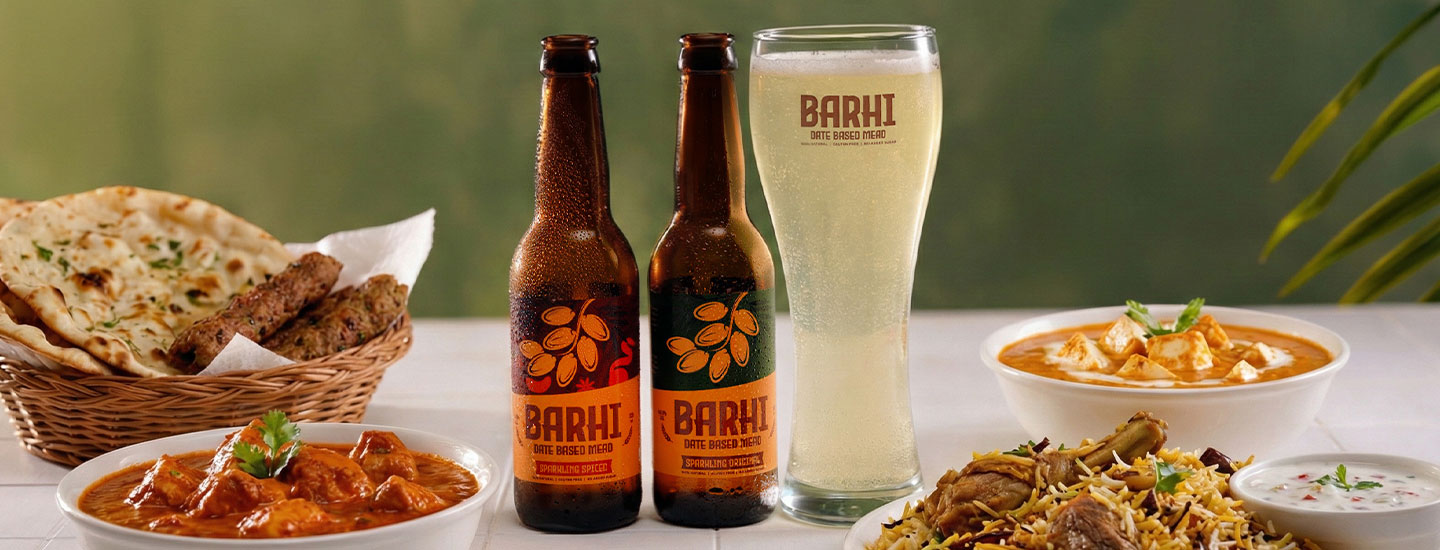
Walk into an Indian restaurant in Britain and one pairing feels almost automatic: curry and beer. It’s such a familiar combination that most of us probably don’t stop to ask why we order it, or whether beer is actually the drink best suited to the food in front of us.
That’s worth questioning because Indian food can ask a lot from a drink. Chilli heat can sit alongside rich creamy gravies, while tandoori cooking brings smoke and char. Chutneys add sweetness and acidity, and seafood, grilled meats, rice, breads and several different dishes may all be shared across the same table.
So perhaps the more useful question isn’t simply what do we normally drink with Indian food? It is this: if the Indian meal came first, what would we actually want the drink beside it to be like?
That is the question that eventually led to BARHI.
Why Do We Automatically Order Beer?
Beer and curry are deeply familiar partners in British dining. Beer is cold, accessible and social, and ordering a pint alongside a curry has become almost instinctive.
But think about the meal itself. An Indian dinner can already be substantial, with starters, breads, rice, rich gravies, grilled dishes and sides being eaten over the course of an evening. A UK pint is 568ml, so two pints means drinking more than a litre of beer alongside everything on the table.
Beer can also bring considerable carbonation, grain character and, depending on the style, lingering hop bitterness. None of this means someone can’t enjoy a beer with Indian food. The more interesting question is whether these are necessarily the characteristics we would choose if we were designing a drink specifically for the meal.
That distinction mattered enormously when BARHI was being developed. We didn’t want the drink to become another substantial part of an already substantial meal. We wanted it to support the food and allow the diner to keep coming back to it.
What Does the Previous Sip Do to the Next Bite?
There is another part of drinking beer with food that is easy to overlook: the flavour of the drink doesn’t necessarily disappear when you swallow it.
Take a dish whose chilli, spice, richness and aromatics have been carefully balanced, then follow a bite with a bitter beer. Depending on the style, some of that hop-led bitterness can remain on the palate when you return to the food. If you enjoy that interaction, that’s a matter of personal taste, but it wasn’t what we wanted when developing BARHI.
Our aim was for the drink to provide refreshment and then allow the food to come back. BARHI isn’t hop-based, so it doesn’t bring hop-led bitterness into the next bite. It was developed with a clean finish because we wanted the flavour of the dish, rather than the previous sip, to regain centre stage.
That doesn’t mean making the drink flavourless. It means understanding when the drink should have character and when it should get out of the way.
Do Wine, Cider or Cocktails Solve the Problem?
Moving away from beer doesn’t automatically solve everything because the other familiar categories bring their own characteristics.
Cider offers fruit, acidity and sparkle, but depending on the style it can also introduce noticeable sweetness and persistent fruit character. That can be enjoyable on its own, but Indian food may already contain sweetness, acidity, chutneys, fruit and complex spice, so another prominent layer isn’t necessarily what every dish needs.
Wine presents a different challenge. Its food-pairing tradition is enormous and a carefully chosen wine can complement an individual dish beautifully, but an Indian meal is often not an individual dish. Tandoori lamb chops, a chilli-forward curry, a rich creamy gravy, seafood, biryani, breads and chutneys might all be shared across one table. The wine selected for one part of that meal may interact very differently with another.
Cocktails offer even more freedom, but that freedom can mean more flavour as well. Citrus, syrups, spirits, fruit, herbs and spices can turn the drink into another major flavour event alongside food that is already extremely complex.
The point isn’t that nobody can enjoy beer, cider, wine or cocktails with Indian food. Of course they can. The distinction is between finding something from an existing drinks category that can work with the meal and developing a drink around what the meal actually requires.
What If the Indian Meal Came First?
This is where BARHI’s story is different.
Instead of starting with an established drinks category and looking for foods that might suit it, we started with the experience of eating. We wanted a drink that was dry because a complex meal didn’t need another persistent layer of sweetness, and light in drinking character because the food itself could already be substantial.
We still wanted some sparkle because refreshment between intense bites matters, but we didn’t want carbonation to dominate the experience. We didn’t want hop-led bitterness carrying into the next bite either. At the same time, BARHI still needed enough character to be enjoyed as a proper alcoholic drink rather than becoming something neutral simply because it was designed for food.
Those requirements shaped the finished product. BARHI is a dry, lightly sparkling 6% ABV Fresh Date Spritz made by fermenting fresh Barhee dates and honey. Despite beginning with ingredients people naturally associate with sweetness, the finished drink is dry and contains just 1.52g of carbohydrate, all of which is sugar, and 115 kcal per 330ml.
These aren’t characteristics we arrived at first and later decided were useful with Indian food. The meal was part of the brief from the beginning.
If you’re interested in the deeper thinking behind carbonation, clean finish and the experience between bites, we’ve explored it separately in What Makes a Good Drink With Food? Here, what matters is how those principles apply to the particular way Indian food is eaten.
Indian Food Isn’t One Flavour, So BARHI Isn’t One Expression
One of the problems with asking for the best drink with “Indian food” is that Indian food isn’t one thing. A chilli-forward curry creates a very different drinking requirement from a rich creamy gravy, while tandoori cooking brings smoke and char that create another experience altogether.
That’s why BARHI Original and BARHI Spiced have different roles at the table.
BARHI Original has the cleaner, crisper profile of the two and works particularly well when chilli heat is one of the defining characteristics of the dish. The idea isn’t to answer intensity with even more intensity, but to provide refreshment before returning to the food.
BARHI Spiced, made with star anise and orange peel, has greater aromatic character and is particularly suited to seafood, rich creamy gravies and tandoori, BBQ or grilled dishes where smoke and char are prominent.
The distinction is important. It isn’t a simplistic Original for mild food, Spiced for spicy food rule. It is about identifying what is actually driving the dish. If chilli heat leads, we reach for Original. If richness, seafood, smoke or char leads, Spiced becomes the more natural choice.
This becomes particularly useful at an Indian table because you may be moving between several of those experiences during the same meal.
Maybe We’ve Been Asking the Wrong Question
For years, we’ve tried to answer the question of which existing alcohol goes best with Indian food. We debate which beer style works, which grape to choose or which cocktail complements a particular curry.
BARHI started by reversing that process. Instead of asking Indian food to fit around an existing drinks category, we asked what we would create if the meal came first.
That meant considering the richness of the food, the chilli, the smoke and char, the complexity of the spices and the fact that several very different dishes might be shared at once. The result was a drink developed to be dry, lightly sparkling and clean-finishing, with two expressions designed for different characteristics of the food.
That’s the difference between finding a pairing and designing for the meal.
BARHI isn’t asking Indian food to work around the drink. The drink was built around the food.
So the next time a pint feels like the automatic order with a curry, it might be worth asking whether that’s what the food actually needs, or simply what we’ve always ordered.
For broader advice across chilli-led cuisines, read What Drinks Pair Best With Spicy Food? For the deeper thinking behind BARHI’s food-first design, explore What Makes a Good Drink With Food? Or discover BARHI Original and BARHI Spiced and find BARHI near you to try the idea with an Indian meal yourself.
Made for the love of food. Brewed for the celebration of laughter.